Planning an Off-Road Expedition from Start to Finish
Long expeditions reward preparation as much as driving skill. Here is how to plan routes, resources and vehicles for a journey across hard terrain.
Scouting the Map Before You Drive
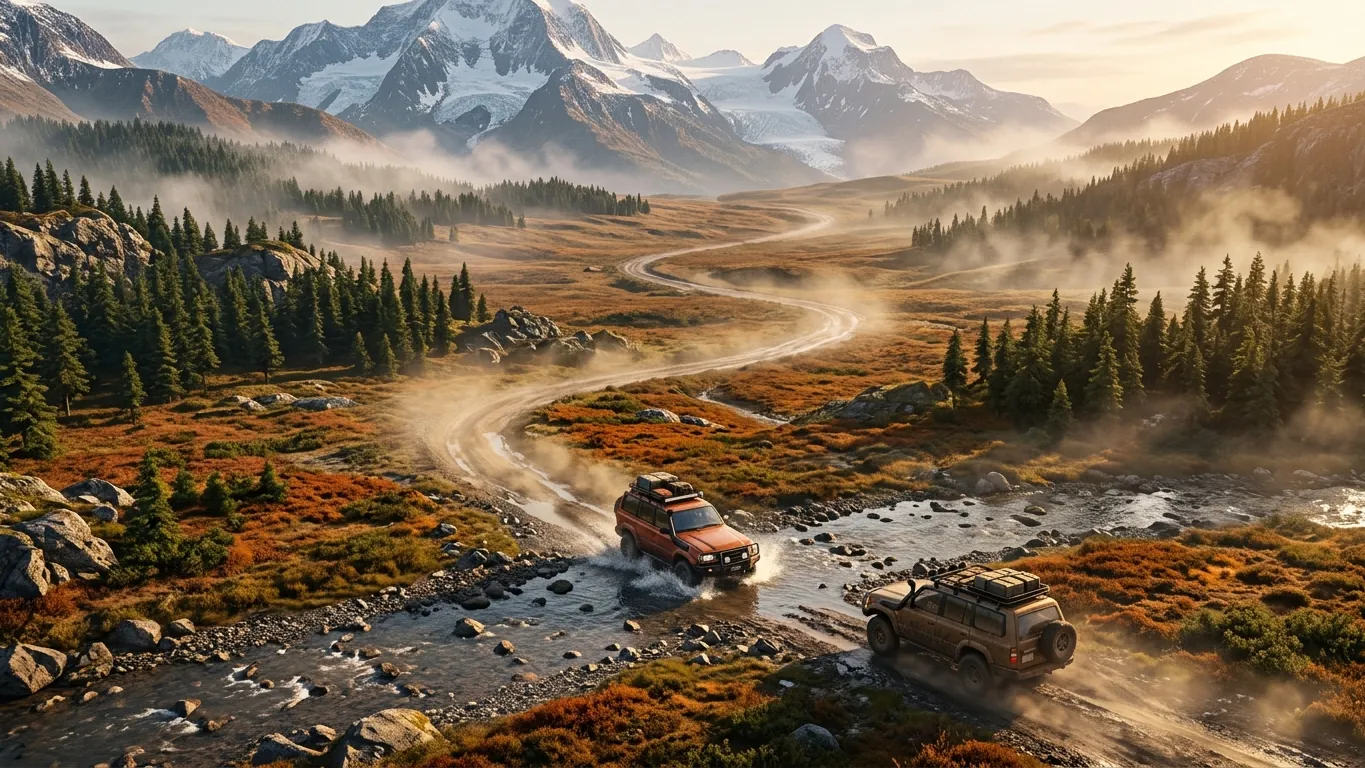
An expedition begins on the map, not on the trail. Before setting off, study the terrain between your start and your destination. Look for rivers, steep elevation changes, swampy lowlands and forest sections that may slow you down.
Identify likely trouble spots and possible detours. A route along a ridge might look longer but stay drier than one through a valley floor. Note any places where you can refuel, repair or rest, if your game includes them. Breaking the journey into stages with clear intermediate goals keeps a long expedition manageable and gives you natural points to reassess.
Fuel, Damage and Range
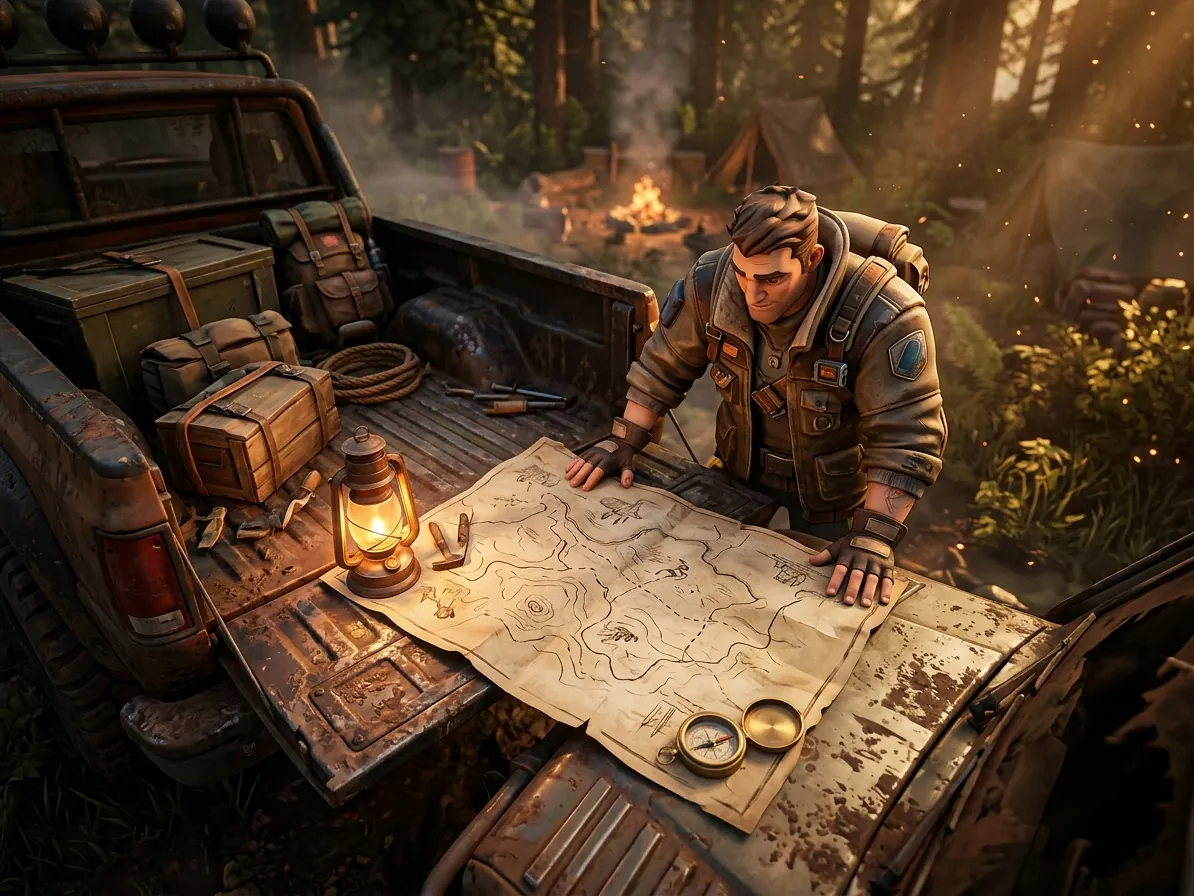
Many expedition-style off-road games track fuel consumption and vehicle damage. Both become limiting factors on long routes. Driving in low range, spinning wheels in mud and winching all tend to use more fuel than cruising on a firm track.
Plan your range with a margin. If the map shows a distant refuel point, consider whether you can reach it with the fuel you carry after accounting for difficult sections. Damage works similarly: rough driving on rocks can wear down suspension or tires, reducing performance later in the journey. Driving smoothly is not just about style; it preserves the resources that let you finish.
Choosing the Right Vehicle for the Route
Vehicles in off-road games usually trade one strength for another. A small, light vehicle may float over soft ground and fit through narrow forest paths but struggle to carry cargo or pull itself through deep mud. A large truck may power through water and heavy terrain but get stuck on tight corners or sink where the ground is weak.
Match the vehicle to the dominant terrain on your planned route. If the journey mixes several terrain types, choose the vehicle that handles the hardest section reasonably well, then plan around its weaknesses elsewhere.
An Expedition Planning Routine
Use this routine before any long journey in an off-road game.
- 01
Mark the destination
Confirm where you need to go and what you need to bring, if the mission includes cargo.
- 02
Scan the terrain
Look for rivers, slopes, swamps and forests along possible routes.
- 03
Pick a primary route
Choose the path that balances distance with predictable ground.
- 04
Plan a backup
Note at least one alternative in case a section proves impassable.
- 05
Check the vehicle
Confirm fuel, repairs and setup suit the terrain you expect.
Adapting When Plans Fail
Even a careful plan will meet surprises. A river may be deeper than expected, or a slope may be too slippery to climb. When that happens, resist the urge to force your way through. Stop, scout the area and compare the cost of a detour with the cost of repeated recovery attempts.
Flexibility is a core skill in expedition gameplay. Treat your plan as a guide rather than a contract. Players who adapt calmly tend to finish more expeditions and enjoy them more, because each obstacle becomes a puzzle to solve rather than a wall to crash into.
Related articles
 Off-Road Racing: Speed, Lines and Consistency
Practical tips for off-road racing in games: balancing momentum and traction, picking lines through rough sections and staying consistent to the finish.
Read more
 Off-Road Vehicle Tuning, Explained Simply
An explainer on off-road vehicle tuning in games: tires, tire pressure, suspension, ground clearance and gearing, and how to match setup to terrain.
Read more
 Controls and Camera Setup for Smoother Off-Road Driving
Set up your controller, keyboard or wheel and camera for off-road driving games, with tips on throttle control, dead zones and practice routines.
Read more