How to Read Off-Road Terrain Before It Reads You
Every surface in an off-road game asks for a different technique. This guide explains how to judge mud, sand, rock and water before you commit.
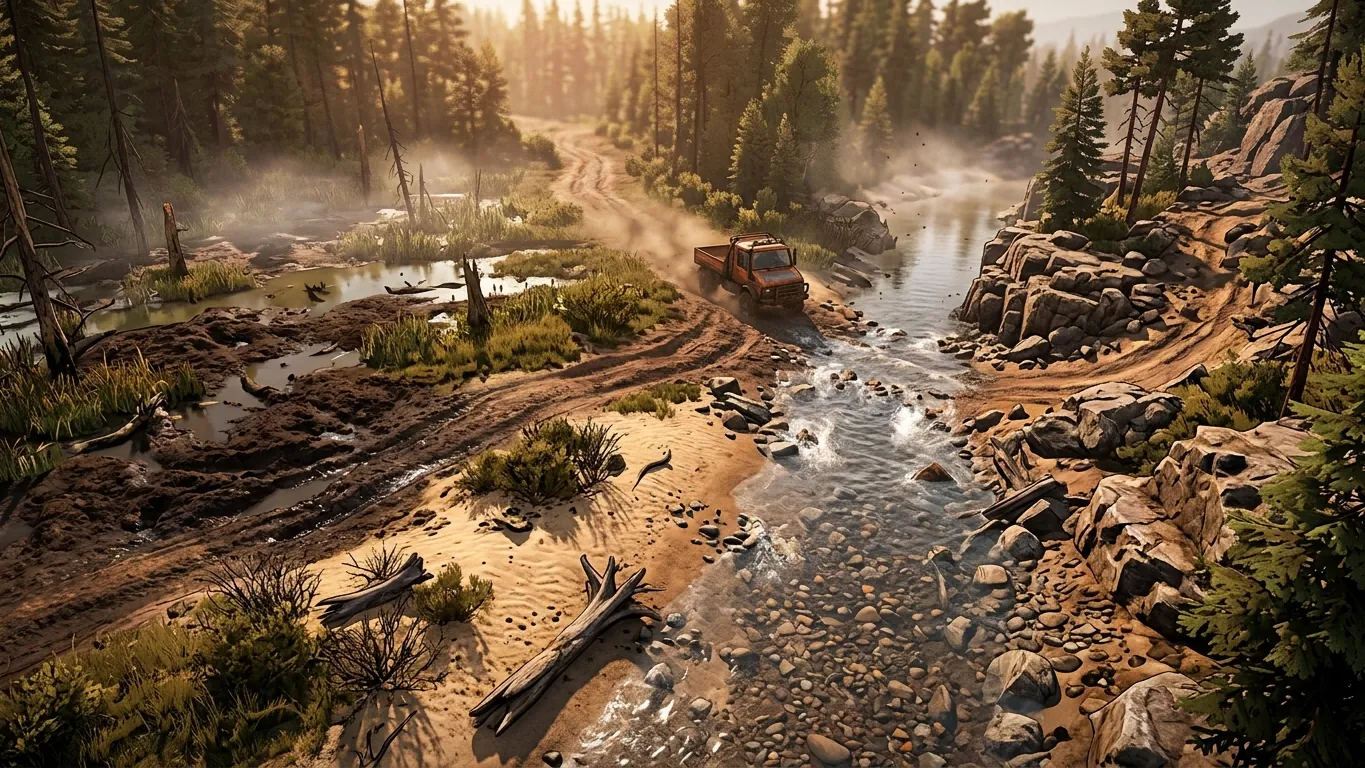
Mud and Soft Ground
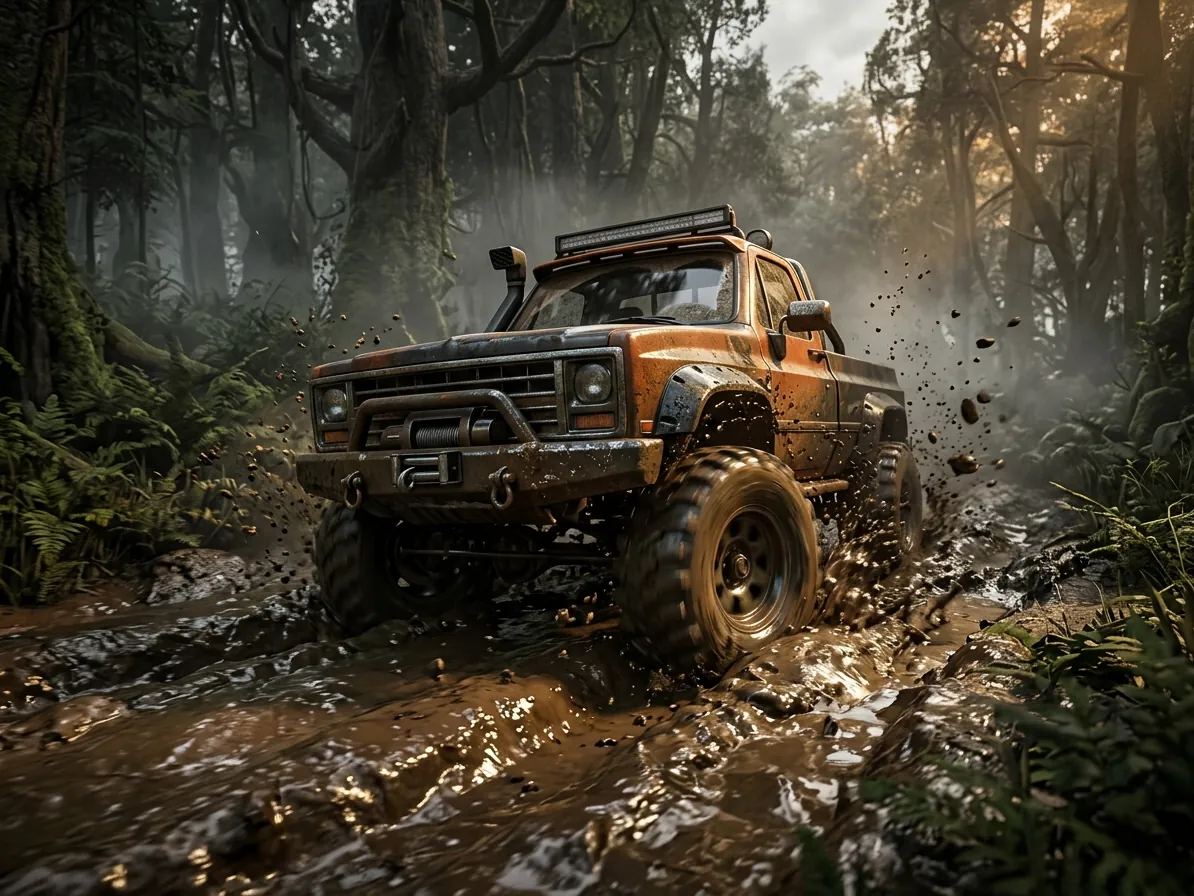
Mud is the signature challenge of the off-road genre, and it comes in many forms. Shallow, wet mud over a firm base can usually be crossed with steady momentum. Deep, soupy mud is different: once the wheels sink past a certain depth, the vehicle can belly out, resting on its chassis with little grip left.
Look for clues before you enter. Darker, glossier surfaces often signal deeper or wetter mud. Existing ruts can help you stay on firmer ground, but very deep ruts may trap you. A sensible approach is to engage all-wheel drive early, keep the throttle steady and avoid sudden steering inputs, which scrub away speed. If your wheels start spinning without forward progress, ease off. Continued spinning often digs the vehicle deeper rather than pulling it out.
Sand and Loose Gravel
Sand rewards momentum. Stopping on soft sand, especially uphill, can leave the vehicle sinking as the wheels try to restart. Many players find that keeping a steady pace and choosing gentle turns works far better than slowing down for every bump.
Loose gravel behaves somewhat like sand but tends to slide sideways on slopes. On gravel climbs, a smooth, consistent throttle keeps the tires biting. In games that model tire pressure, lower pressure can increase the contact patch on soft surfaces, though it may make the vehicle feel less stable on firm roads.
Rocks and Ledges
Rocky terrain is the opposite of sand. Here, speed is usually your enemy. Hitting a ledge quickly can bounce the vehicle, damage the suspension in games that track damage, or launch it into an awkward angle.
The usual technique is to crawl. Select low range, lock differentials if one wheel is likely to lift and place each tire deliberately. Aim to climb ledges with a tire rather than the underside of the vehicle. Watching the wheel positions from an external camera helps you judge whether the chassis has enough clearance.
Water Crossings
Rivers and fords add uncertainty because you cannot always see the bottom. In many off-road games, deep water can push a vehicle downstream or stall it if the water rises too high. Before crossing, look for shallow entry and exit points and the calmest part of the current.
Enter slowly to avoid a large bow wave, then keep a steady, moderate speed. Aim slightly upstream if the current is strong so the water does not carry you off your line. Exits are often muddy or steep, so prepare drive settings before you reach the far bank rather than while climbing it.
Using the Camera to Scout
One of the most useful habits in off-road games is to stop and look. Rotate the camera, zoom out and study the section ahead before driving into it. Many problems are visible in advance: a hidden dip, a log under the mud, a bank that is steeper than it first appeared.
If your game allows you to walk or scout on foot or with a free camera, use it on unfamiliar ground. A short pause to plan a line almost always costs less time than recovering a stuck vehicle. Over time, reading terrain becomes instinctive, and you will begin to adjust your speed, line and settings before the ground forces you to.
Related articles
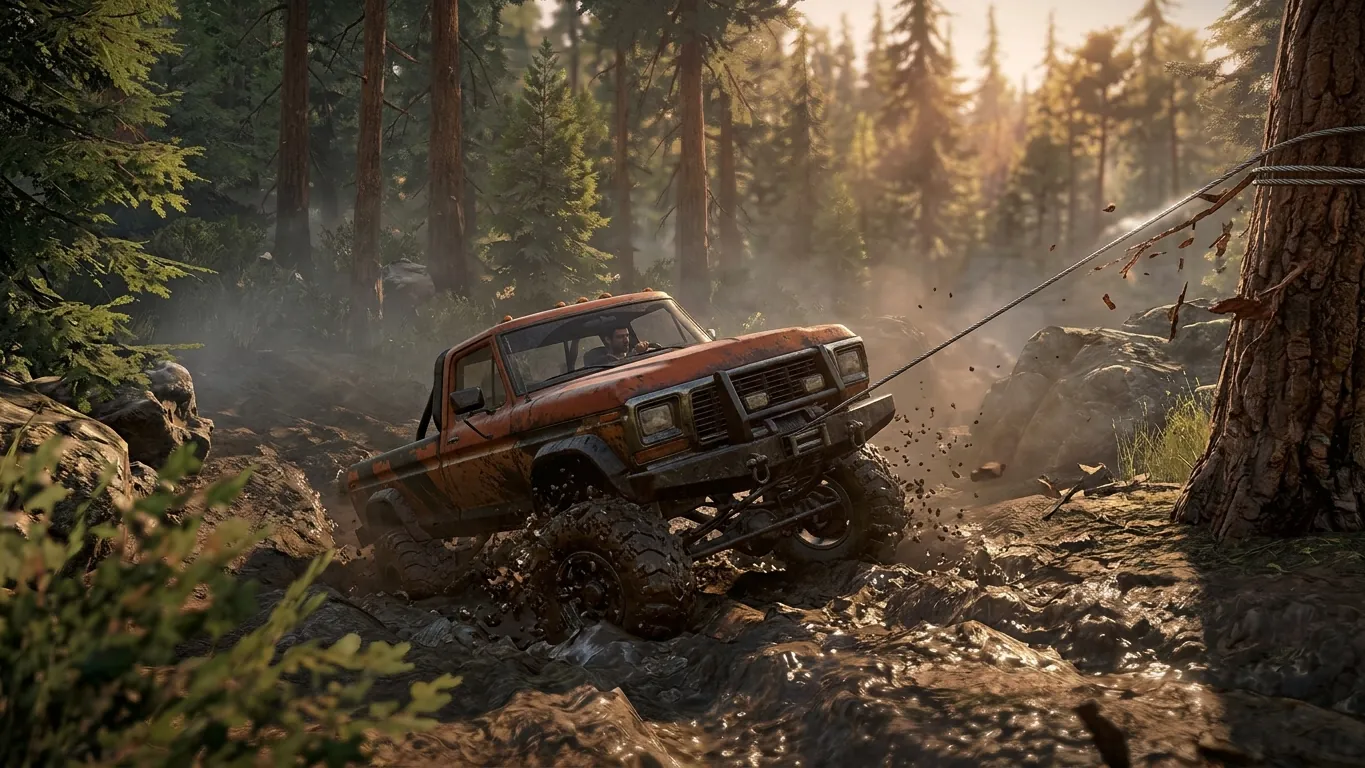 Winching and Recovery: Getting Unstuck the Smart Way
A step-by-step guide to winching and self-recovery in off-road games: choosing anchor points, controlling the cable and avoiding the same trap twice.
Read more
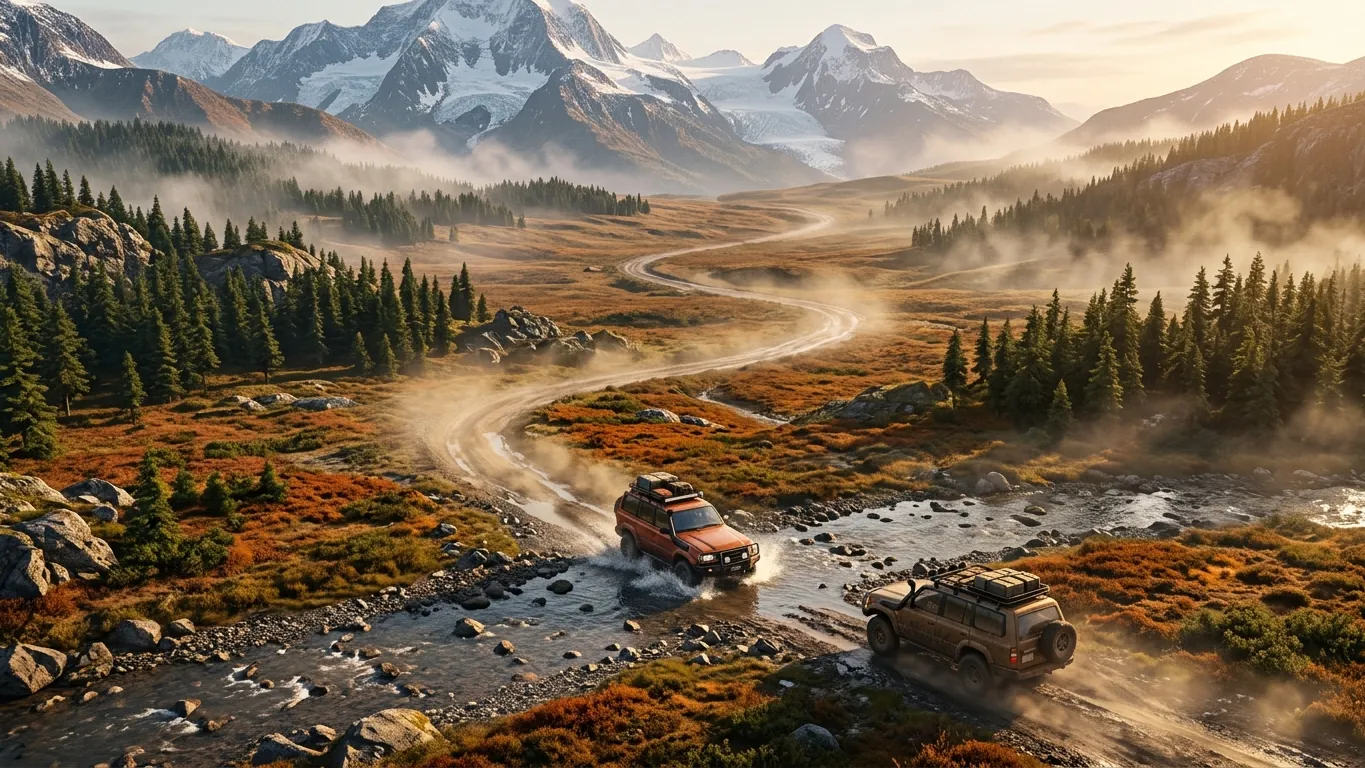 Planning an Off-Road Expedition from Start to Finish
Plan long off-road expeditions in driving games: scout the map, manage fuel and damage, choose the right vehicle and adapt when the route fails.
Read more
 Off-Road Racing: Speed, Lines and Consistency
Practical tips for off-road racing in games: balancing momentum and traction, picking lines through rough sections and staying consistent to the finish.
Read more