Winching and Recovery: Getting Unstuck the Smart Way
Getting stuck is part of off-road gaming. This guide walks through a calm, reliable approach to winching and recovery.
Why Recovery Is Part of the Game
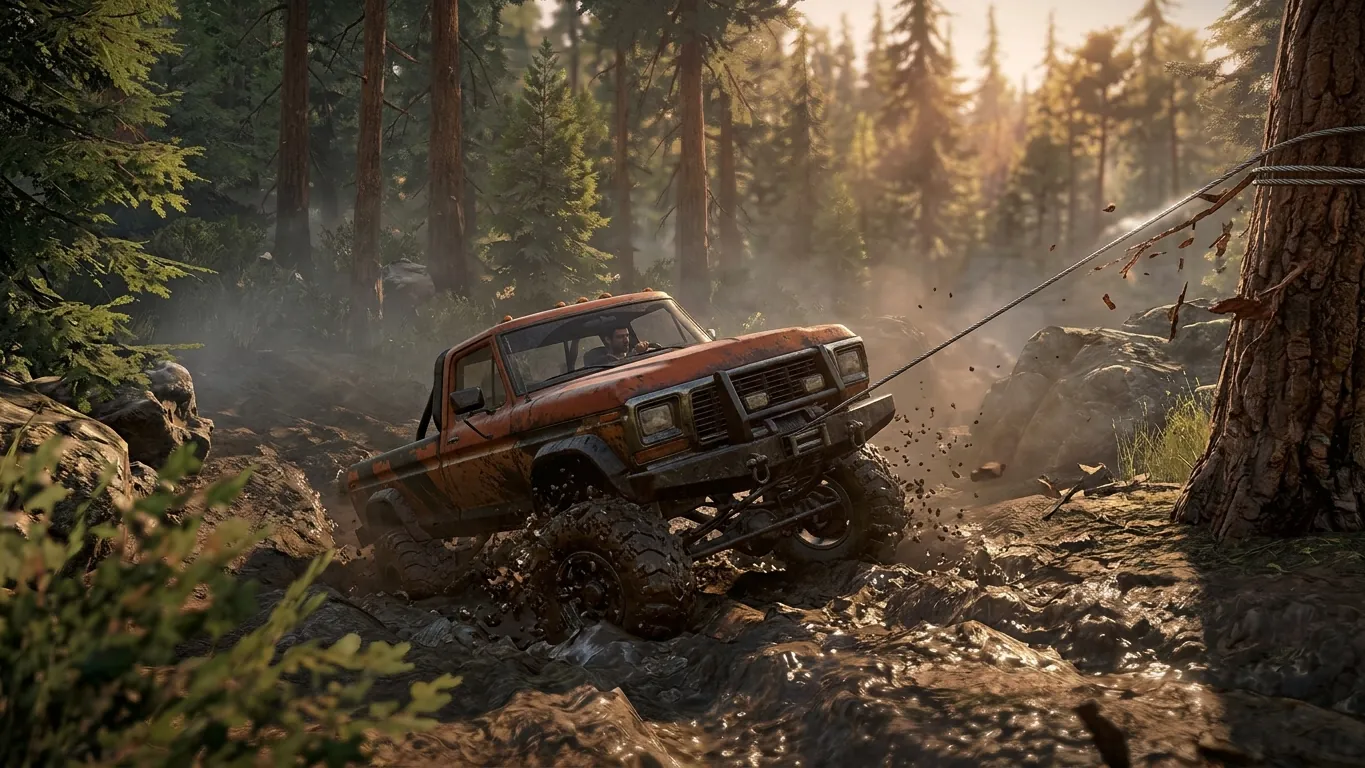
In off-road driving games, getting stuck is not a failure. It is part of the experience. The terrain is designed to test you, and even careful drivers will eventually sink into a bog, slide into a ditch or hang a wheel off a ledge.
What separates a frustrating session from a satisfying one is how you handle recovery. Panicking and flooring the throttle usually makes things worse. A calm, systematic approach lets you get moving again with minimal damage and fuel use. The winch, where your vehicle has one, is the most important tool for this, but it works best when you understand the basic principles of pulling direction and anchor choice.
A Calm Winching Sequence
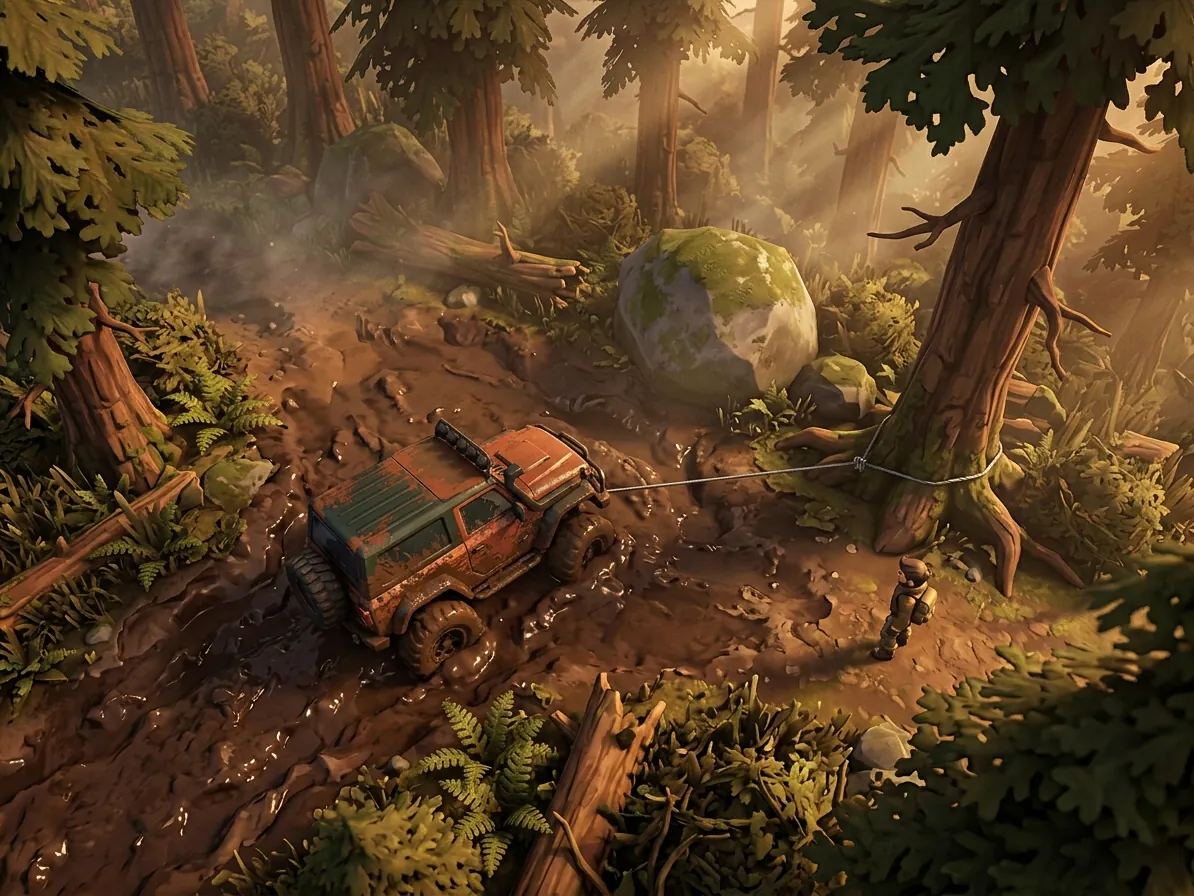
This general sequence works in most off-road games that include winches. Adjust it to how your game handles the controls.
- 01
Stop and assess
Release the throttle. Look around with the camera and identify why you are stuck and which direction leads to firmer ground.
- 02
Choose an anchor
Pick a solid anchor point, such as a sturdy tree or large rock, ideally in the direction you want to travel.
- 03
Attach the cable
Connect the winch and check that the cable path is reasonably clear and as straight as possible.
- 04
Pull with gentle throttle
Start winching and add light throttle so the wheels help rather than fight the cable.
- 05
Release and continue
Once on firm ground, detach the winch and reset your drive settings before moving on.
Choosing an Anchor Point
The direction of the pull matters more than many players expect. Pulling straight toward firm ground is usually most effective. A pull at a sharp angle can drag the vehicle sideways, which may slide it deeper into a rut or toward a drop.
When no anchor lies directly ahead, consider a partial pull: winch toward an angled anchor just far enough to free the wheels, then drive out. Some games allow you to reposition the cable several times in a row. Breaking one hard recovery into two or three shorter pulls is often easier than attempting a single long one.
When to Use a Second Vehicle
Some off-road games let you control several vehicles or play cooperatively with other players. In those cases, another vehicle can serve as a moving anchor or tow point. A heavier vehicle on firm ground is a strong anchor, while a light vehicle may simply be pulled toward you.
Coordinate the direction of the pull just as you would with a tree. If you play with friends, agree on who pulls and who drives before starting, since both vehicles applying throttle in different directions can make the situation worse.
Avoiding the Same Trap Twice
After a recovery, take a moment to think about what caused the problem. Was the mud deeper than it looked? Did you enter without four-wheel drive or a locked differential? Were you carrying too much speed into a side slope?
Once you know the cause, adjust your line or settings before trying again. If the same section keeps catching you, look for an alternative route, even if it seems longer. In expedition-style games, a slightly longer path that you can drive cleanly often saves more time and fuel than a short one that requires repeated recoveries. Over time, these small reflections make you a far more confident driver.
Related articles
 Planning an Off-Road Expedition from Start to Finish
Plan long off-road expeditions in driving games: scout the map, manage fuel and damage, choose the right vehicle and adapt when the route fails.
Read more
 Off-Road Racing: Speed, Lines and Consistency
Practical tips for off-road racing in games: balancing momentum and traction, picking lines through rough sections and staying consistent to the finish.
Read more
 Off-Road Vehicle Tuning, Explained Simply
An explainer on off-road vehicle tuning in games: tires, tire pressure, suspension, ground clearance and gearing, and how to match setup to terrain.
Read more