Drive mode
Is power going to all wheels? If the surface looks soft or steep, engage it now.
Drive modes, low range and differential locks are the core tools of off-road games. This guide explains what each one does and when to use it.
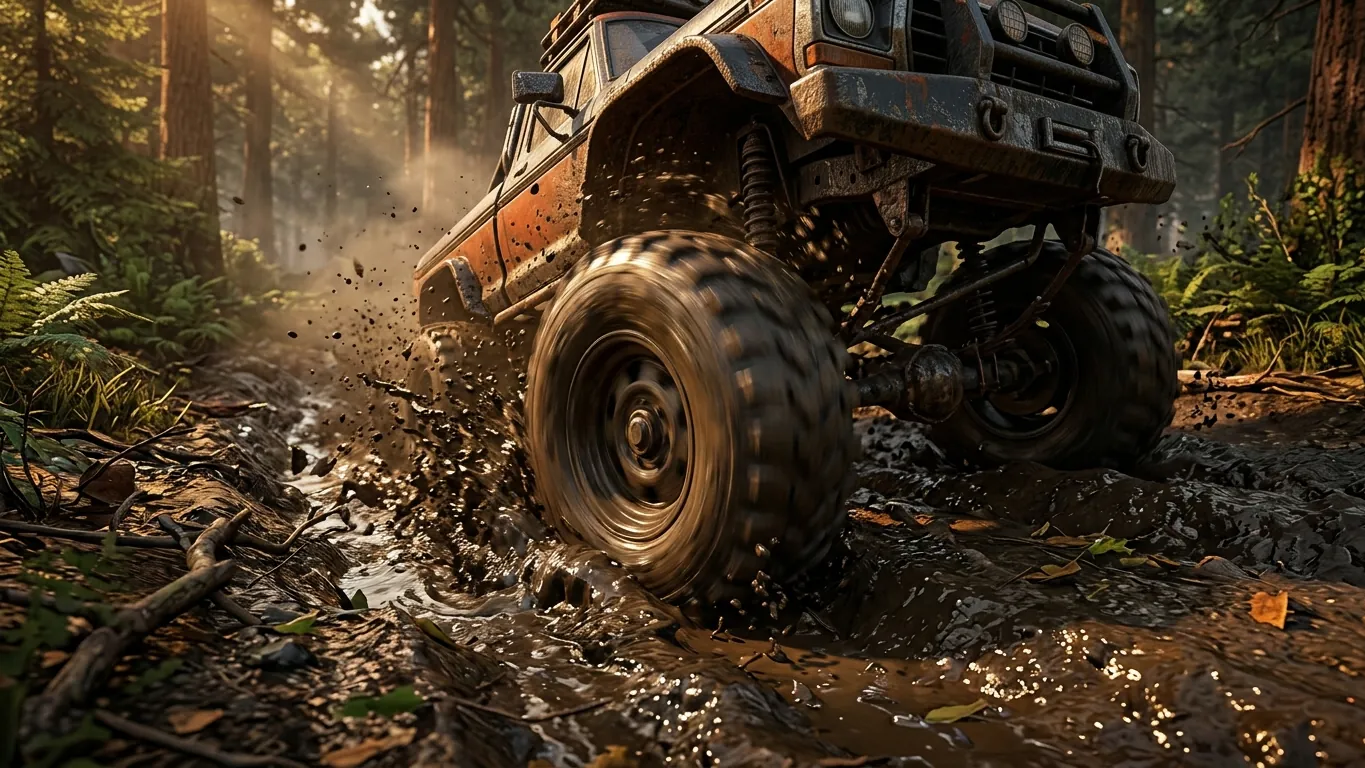
In most off-road games, the first decision you make on rough ground is how many wheels receive power. In two-wheel drive, only one axle is driven. It is efficient on firm roads and often gives lighter steering, but as soon as the driven wheels lose grip, the vehicle has nothing else to push with.
Four-wheel drive sends power to both axles. On loose or slippery surfaces this matters enormously, because if the rear wheels slip, the front wheels can still pull. Some games also model all-wheel drive systems that stay engaged automatically. The practical lesson is the same across the genre: when the ground gets soft, steep or slick, engage drive to all wheels before you need it, not after you are already stuck. Switching modes mid-slide rarely saves you, while switching early keeps momentum and traction working together.
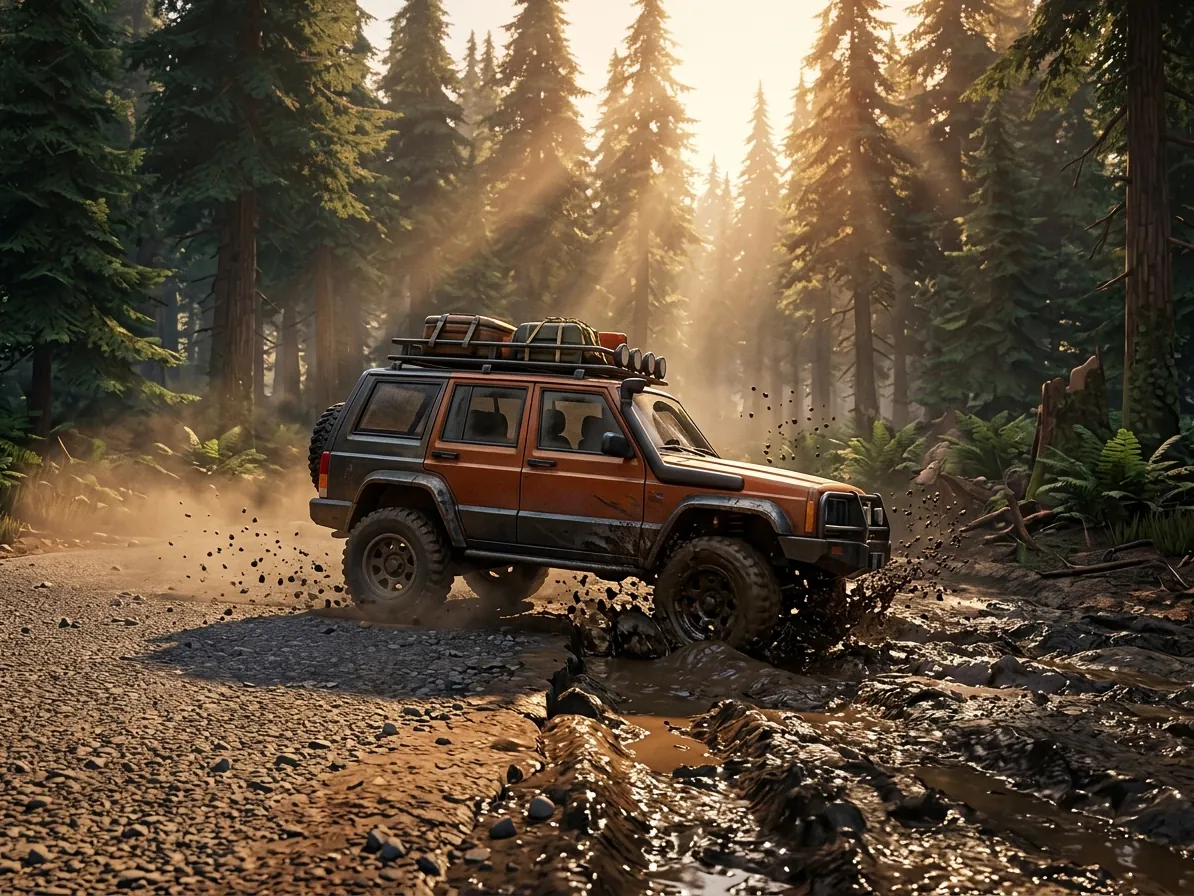
Many vehicles in off-road games offer a low range gear setting. Low range multiplies the torque reaching the wheels while reducing top speed. In practical terms, the engine can turn the wheels with more force at a slower, more controllable pace.
This is valuable on steep climbs, in deep mud and on rocky sections where you need to creep forward rather than bounce. Low range also helps when descending, because the engine holds the vehicle back more strongly. The trade-off is speed: on open trails, low range feels sluggish and wastes time. A good habit is to treat low range as a tool for technical sections and switch back once the ground becomes easier.
A differential lets the wheels on the same axle turn at different speeds, which is essential for smooth cornering. The downside is that an open differential tends to send power to the wheel with the least resistance. If one wheel is in the air or on slick mud, it can spin freely while the wheel with grip barely moves.
A differential lock forces both wheels on an axle to turn together. Suddenly the wheel with traction gets its share of the power, and the vehicle can climb out of situations that looked hopeless. The catch is steering: with locks engaged, the vehicle resists turning and can feel stubborn on firm ground. Use locks when you are crossing ruts, ledges or deep mud, and release them when you need to steer normally again.
Before entering a difficult section, it helps to run through a short mental checklist.
Is power going to all wheels? If the surface looks soft or steep, engage it now.
Do you need the extra torque and control of low range for this section?
Will one wheel likely lose contact or grip? Lock before you commit, not halfway through.
Once through, switch back to settings that make steering and speed easier.
These systems work best in combination. A typical approach to a muddy uphill rut might be: engage four-wheel drive on the approach, select low range, lock the rear differential, then use steady, gentle throttle. If the vehicle stalls, back off slightly rather than flooring it, since excessive wheel spin often digs you deeper.
Different games model these mechanics with different levels of detail. Some reward precise use of every setting, while others simplify the process. Spend a few minutes in an easy area testing how your game responds to each mode. That small investment makes every expedition and race afterward feel more predictable and far less frustrating.
 How to Read Off-Road Terrain Before It Reads You
Learn to read mud, sand, rock and water crossings in off-road games, and how each surface changes your choice of speed, line and drive settings.
Read more
 Winching and Recovery: Getting Unstuck the Smart Way
A step-by-step guide to winching and self-recovery in off-road games: choosing anchor points, controlling the cable and avoiding the same trap twice.
Read more
 Planning an Off-Road Expedition from Start to Finish
Plan long off-road expeditions in driving games: scout the map, manage fuel and damage, choose the right vehicle and adapt when the route fails.
Read more