Mastering Hill Climbs, Side Slopes and Descents
Slopes test traction, balance and nerve. These tips explain how to approach climbs, side slopes and descents with more control.

Approaching a Climb
A successful climb usually begins before the wheels touch the slope. Stop at the bottom and study the hill. Look at the surface: is it loose dirt, wet grass, rock or mud? Check for ledges, ruts or obstacles partway up that could stall your progress.
Choose your line carefully. In most cases, climbing straight up the fall line is safer than climbing at an angle, because it keeps the vehicle balanced and reduces the risk of tipping sideways. Prepare your drive settings at the bottom: all-wheel drive, low range if the climb is steep or technical, and differential locks if wheels may lose grip.
Momentum on Slopes
Momentum plays an interesting role on hills. On loose or slippery climbs, a steady approach speed can carry the vehicle over sections where traction is limited. Stopping halfway on a soft slope can make restarting very difficult.
On rocky or uneven climbs, however, too much speed causes bouncing, which lifts wheels off the ground and reduces grip. In those situations, a slow crawl with steady throttle tends to work better. If you begin to lose traction, easing off slightly can let the tires regain grip. Flooring the throttle often just spins the wheels and digs into the surface.
Side Slopes and Rollovers
Driving across a slope rather than up or down it is one of the riskiest situations in off-road games. The vehicle's weight shifts toward the downhill side, and if the angle becomes too steep, it may tip over. Taller vehicles with high ground clearance are often more vulnerable.
When you must cross a side slope, keep speed low and avoid sudden steering inputs. Watch for bumps or ruts on the uphill side, since driving over them tilts the vehicle further. If the vehicle starts to feel unstable, steering gently downhill can often reduce the tilt. Where possible, choose a route that avoids steep side slopes altogether.
Controlled Descents
Going downhill can be as challenging as climbing. Gravity wants to accelerate the vehicle, and heavy braking on loose ground can lock the wheels, causing a slide. Low range helps here, because the engine holds the vehicle back more strongly.
Point the vehicle straight down the slope and keep the speed low and steady. Use light, controlled braking rather than sudden stops. If the rear begins to slide sideways, a small, careful touch of throttle can help straighten it. As with climbs, scout the descent first so that a hidden ledge or ditch at the bottom does not take you by surprise.
A Simple Slope Checklist
Run through these steps before any steep climb or descent.
- 01
Scout the slope
Look at the surface, obstacles and the top or bottom before committing.
- 02
Pick a straight line
Aim straight up or down the fall line where possible.
- 03
Set the drivetrain
Engage all-wheel drive, low range and locks as the terrain requires.
- 04
Control the throttle
Use steady, measured input and ease off if the wheels begin to spin.
- 05
Plan a bailout
Know where you can safely reverse or turn if the attempt fails.
Related articles
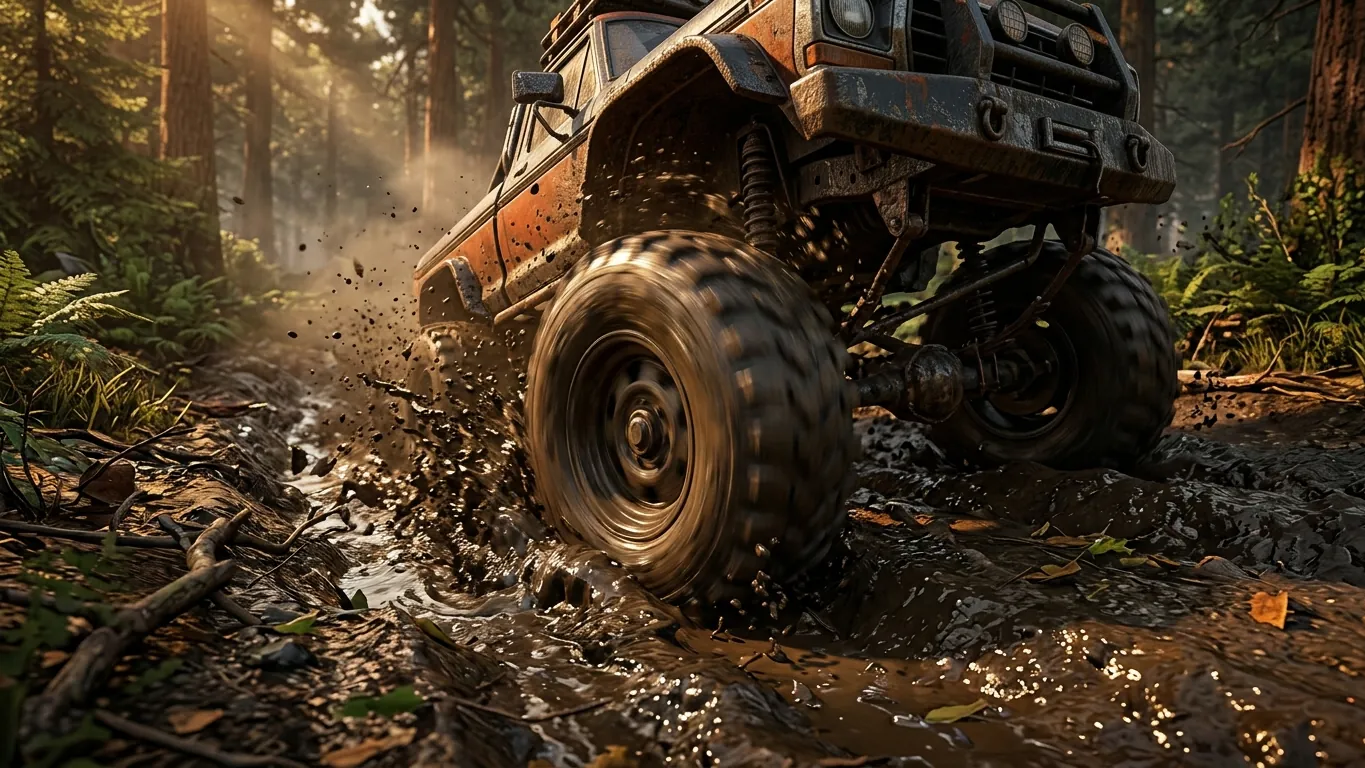 Four-Wheel Drive Basics Every Off-Road Player Should Know
Understand two-wheel, all-wheel and four-wheel drive, low range and differential locks, and how each one changes the way your vehicle behaves off-road.
Read more
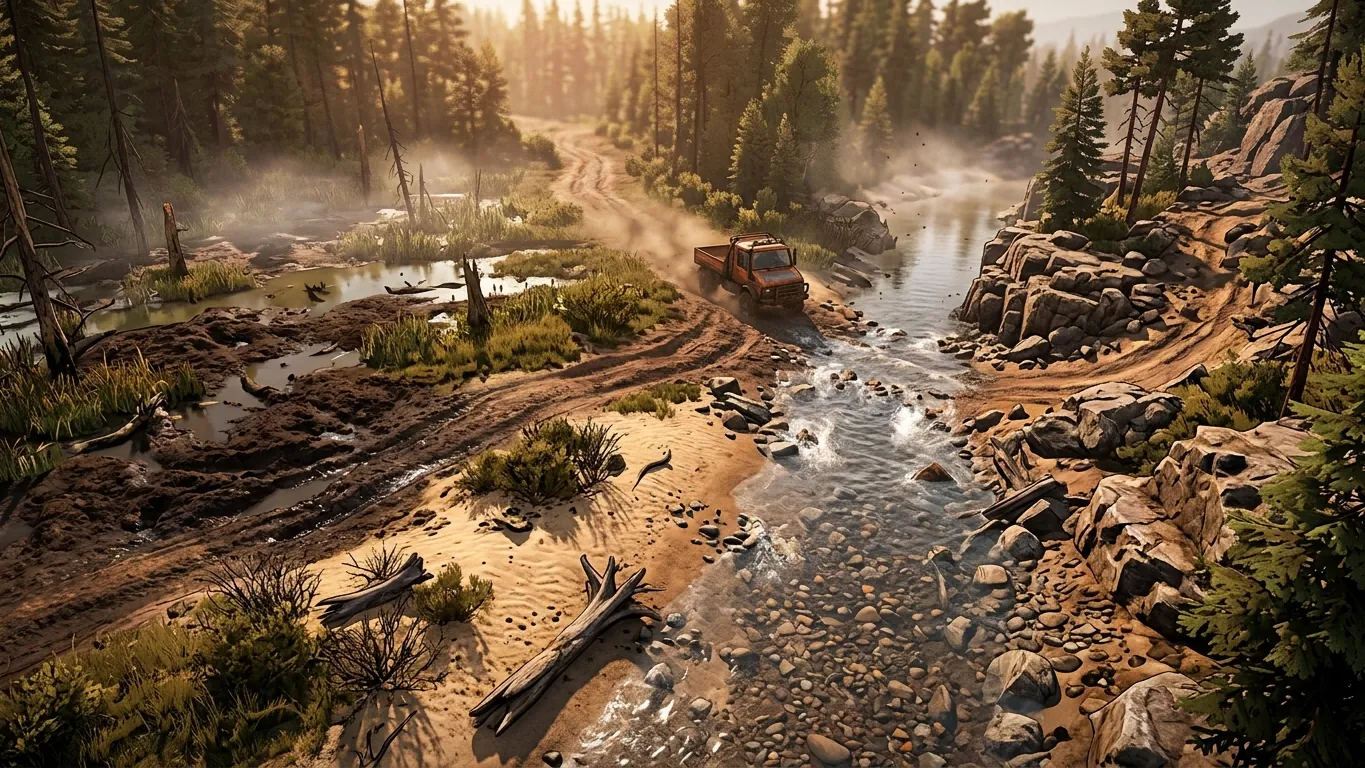 How to Read Off-Road Terrain Before It Reads You
Learn to read mud, sand, rock and water crossings in off-road games, and how each surface changes your choice of speed, line and drive settings.
Read more
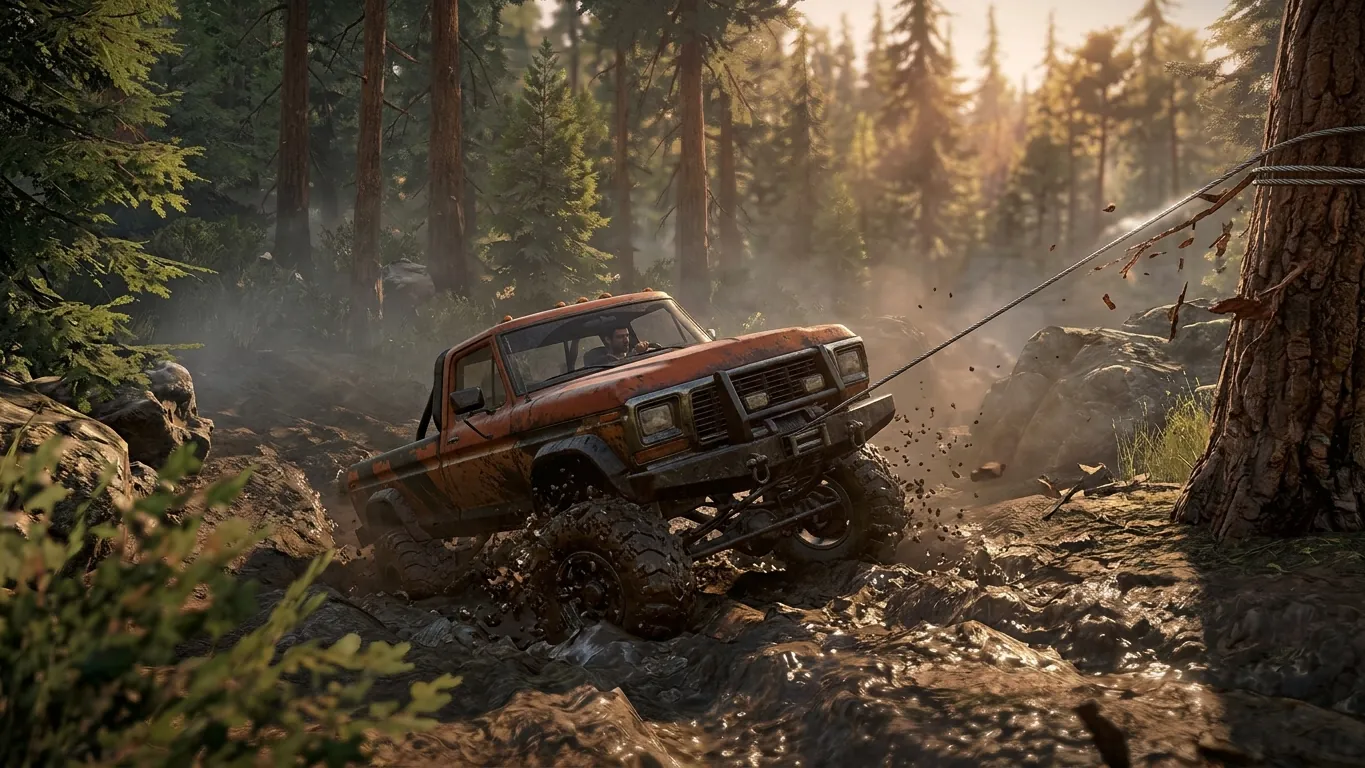 Winching and Recovery: Getting Unstuck the Smart Way
A step-by-step guide to winching and self-recovery in off-road games: choosing anchor points, controlling the cable and avoiding the same trap twice.
Read more