Why Slow Driving So Often Wins Off-Road
Off-road games reward patience in a way few other driving games do. This opinion piece explains why slowing down is often the faster choice.
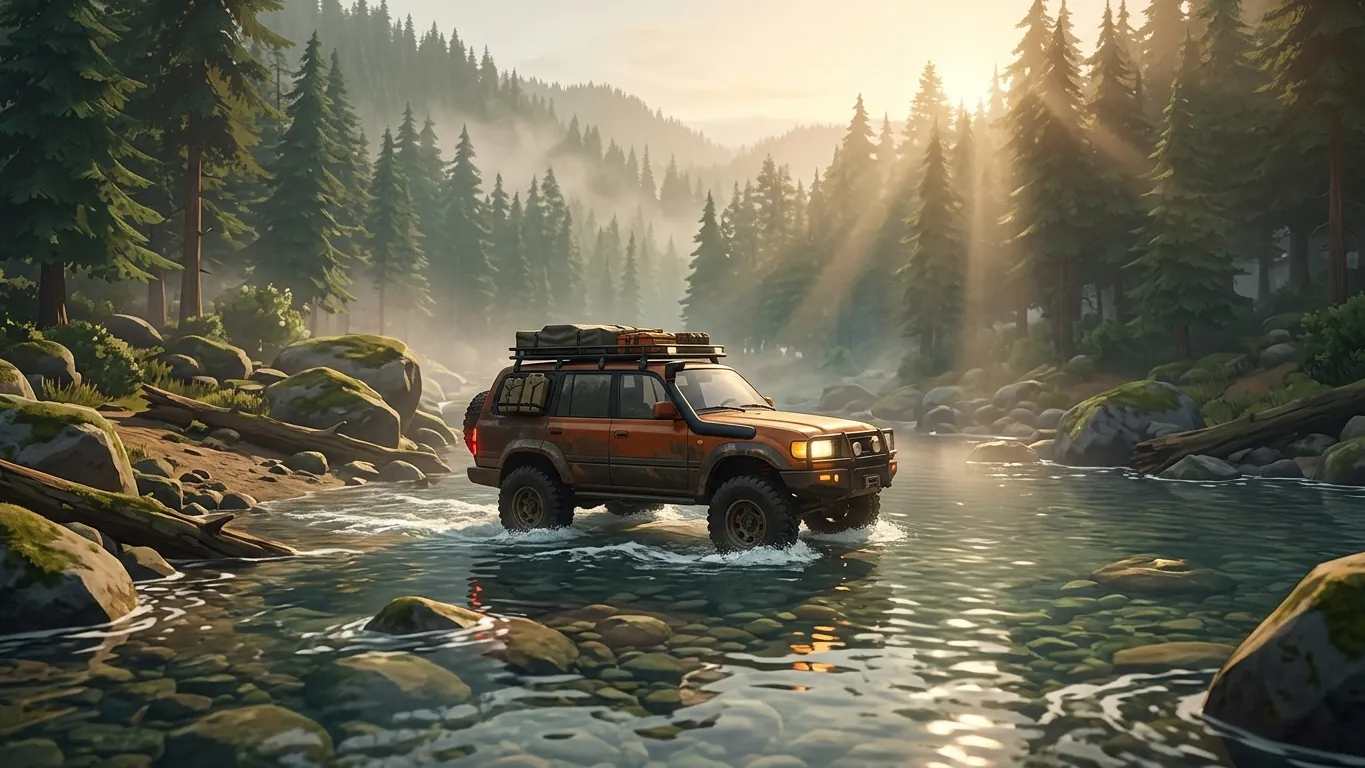
The Temptation of Full Throttle
Most driving games teach us that speed is the goal. Hit the apex, hold the throttle, shave seconds off the lap. It is natural to bring that instinct into off-road games, and the first swamp usually corrects it quickly.
When wheels spin in deep mud, more power rarely helps. The vehicle digs itself in, tilts into a rut or slides sideways off the line. Players who try to muscle through every obstacle often spend more time winching and recovering than driving. In our view, learning to resist full throttle is one of the most important steps in enjoying this genre.
What the Simulation Rewards
Off-road games that aim for realistic physics tend to model traction, weight and terrain deformation in detail. In such games, slow and steady inputs keep tires in contact with the ground and preserve grip. A gentle climb often succeeds where an aggressive one fails, simply because the tires never break loose.
Slow driving also protects your vehicle. In games that track damage or fuel, careful driving can mean the difference between finishing an expedition and running out of resources halfway. The simulation is, in a sense, inviting you to think like a careful driver rather than a racer.
Slow Is Not Boring
Some players worry that slow driving will feel dull. In practice, it often feels the opposite. Crawling over rocks, picking a line through a river or inching up a steep bank requires concentration and creates genuine tension. Each obstacle becomes a small puzzle, and solving it brings real satisfaction.
The atmosphere of off-road games also benefits from a slower pace. Landscapes, weather and the sound of the engine working hard become part of the experience. Rushing past them means missing much of what makes the genre distinctive.
When Speed Is the Right Choice
None of this means speed is always wrong. Soft sand often requires momentum. Shallow mud on a firm base can be crossed faster than it might seem. Racing modes naturally reward pace, and some obstacles are easier to clear with a steady run-up than a cautious crawl.
The real skill lies in judgment: recognizing when momentum helps and when it hurts. A driver who knows when to slow down can also commit confidently when speed is genuinely useful. Slow driving is not a rule to follow blindly, but a default that serves you well until the terrain says otherwise.
A Mindset for the Genre
Our opinion is simple: off-road games are at their best when approached with patience and curiosity. Stop to look at the terrain. Choose your settings before an obstacle, not during it. Treat getting stuck as feedback rather than failure.
This mindset makes the games more enjoyable and, in many cases, faster overall. Fewer recoveries, less damage and more consistent progress add up. If you have been fighting the terrain, try slowing down for a session and see how it changes the experience. You may find that the trail feels less like an enemy and more like a challenge worth taking on carefully.
Related articles
 Mastering Hill Climbs, Side Slopes and Descents
Tips for steep hill climbs, side slopes and controlled descents in off-road games, with a simple checklist to approach any slope with confidence.
Read more
 Four-Wheel Drive Basics Every Off-Road Player Should Know
Understand two-wheel, all-wheel and four-wheel drive, low range and differential locks, and how each one changes the way your vehicle behaves off-road.
Read more
 How to Read Off-Road Terrain Before It Reads You
Learn to read mud, sand, rock and water crossings in off-road games, and how each surface changes your choice of speed, line and drive settings.
Read more